Part I – Feudalism, Manorialism, and Succession.
Feudalism and manorialism are a good place to start when discussing land ownership in the United Kingdom. These are related but different concepts. In feudalism a vassal is granted a fief by a lord, that is, the right to governance of a piece of land. In return the vassal typically owed the promise of military service. A classic example is knight-duty during the crusades, where knights would perform military service in the context of campaigns to the Holy Land, in exchange for the lands they had been granted under fealty. There were other forms of payment too; clergymen would offer frankalmoign; prayers for their overlord in exchange for their tenure.

The obligations went the other way too; grantors of fiefs owed the occupants of the land a measure of protection from outside forces. Great lands were granted to the highest ranking lords by the Monarch, who was regarded as being ordained by God. From the most powerful lords there was then a chain of infeudations right down to those who effectively subsisted through their labour upon small plots of land, typically in a manorial setting:
Manorialism refers to the self- sufficient social and spatial arrangement of an economy around a medieval manor. This is said to have originated in Roman Times and was driven by agricultural activity with the labourers (originally) paying the lord in-kind with their labour. As the economy became more complex, payment was made with money instead. Manorialism as the principal form of economic contract was gradually replaced by the market economy, where the grower of produce could sell to the highest bidder, be they their lord of the manor or somebody from somewhere else who offered a better price. The promise of military service slowly began to come with the option of socage; that is, a monetary payment in lieu of knight service.

One thing that hastened the demise of feudal systems was a law passed in 1290 known as Quia Emptores. Before Quia Emptores subinfeudation was commonplace. If a nobleman had been granted a fief he could then take part of it and subinfeudate to another individual, who then became his vassal. It was common practice for the eldest son to subinfeudate out to his younger brothers. After Quia Emptores this was forbidden and instead the tenant could only install somebody else on the land by substitution. In substitution the bond between the land and the first owner are severed, and a new bond of fealty is created between the incoming tenant, the land and the lord who forms the next link up the chain. Indeed at the time of Quia Emptores the traditions of feudalism were already undergoing disruption; many were starting to alienate themselves from their feudal land rights in exchange for monetary compensation.
There is considerable uncertainty about the development of feudal systems and what preceded them. There is some material recorded in the Venerable Bede’s 731 AD Historia Abbatum that suggests the oldest son may have been given preferential treatment in succession. There are legal stipulations from the Ninth Century that seem somewhat bizarre to us now: King Alfred of the Saxons r. AD 871-886 decreed that across the land neither an ‘abducted nun’ or any child she might bear were to receive any inheritance. The custom tending towards male-preference primogeniture recorded by the Venerable Bede may have been tightly localised. Indeed other sources such as Domesday (AD 1086) show that land could be passed from a father to his sons, the custom being perhaps to pass property over before death, this allowing for more flexible arrangements with less dispute than posthumous division. It is clear from Domesday that where there were no sons, land could also be divided, perhaps equally, among daughters. So Anglo-Saxon inheritance practices had a certain ‘elasticity’ to them1.
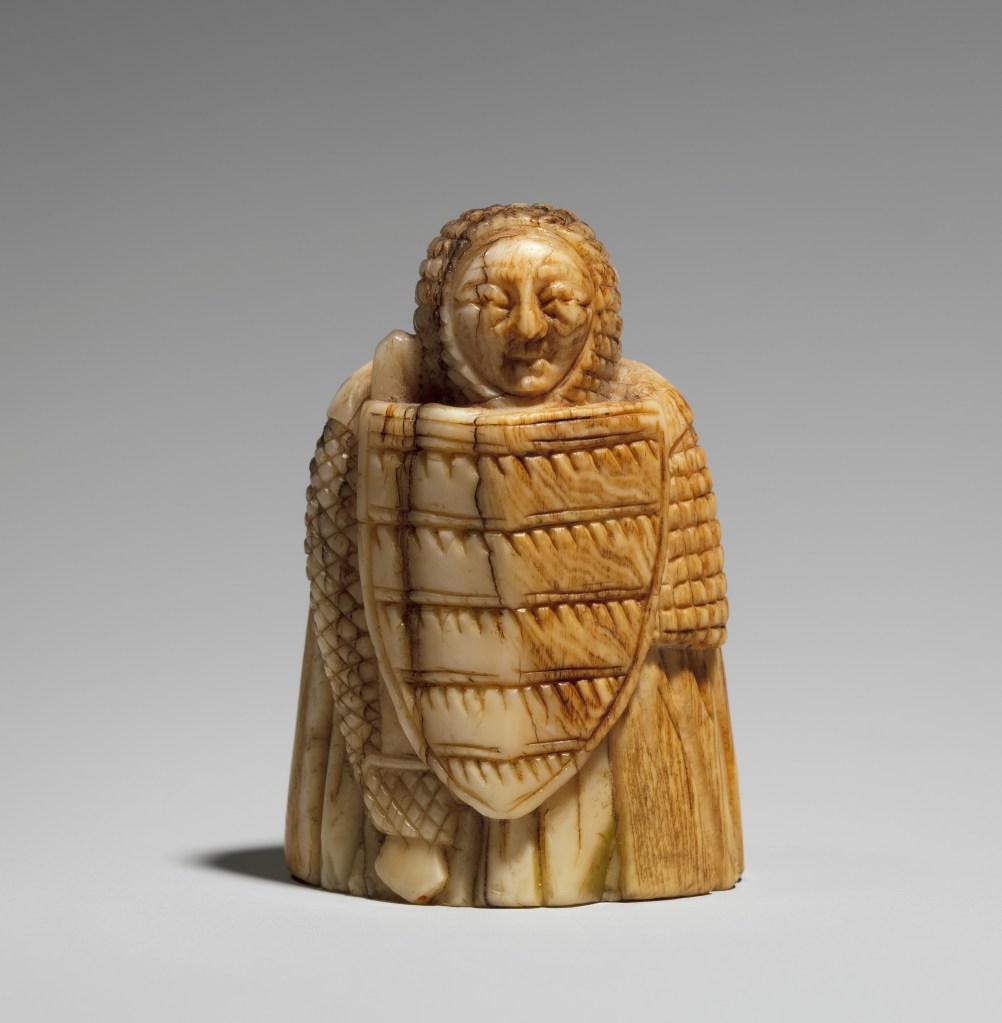
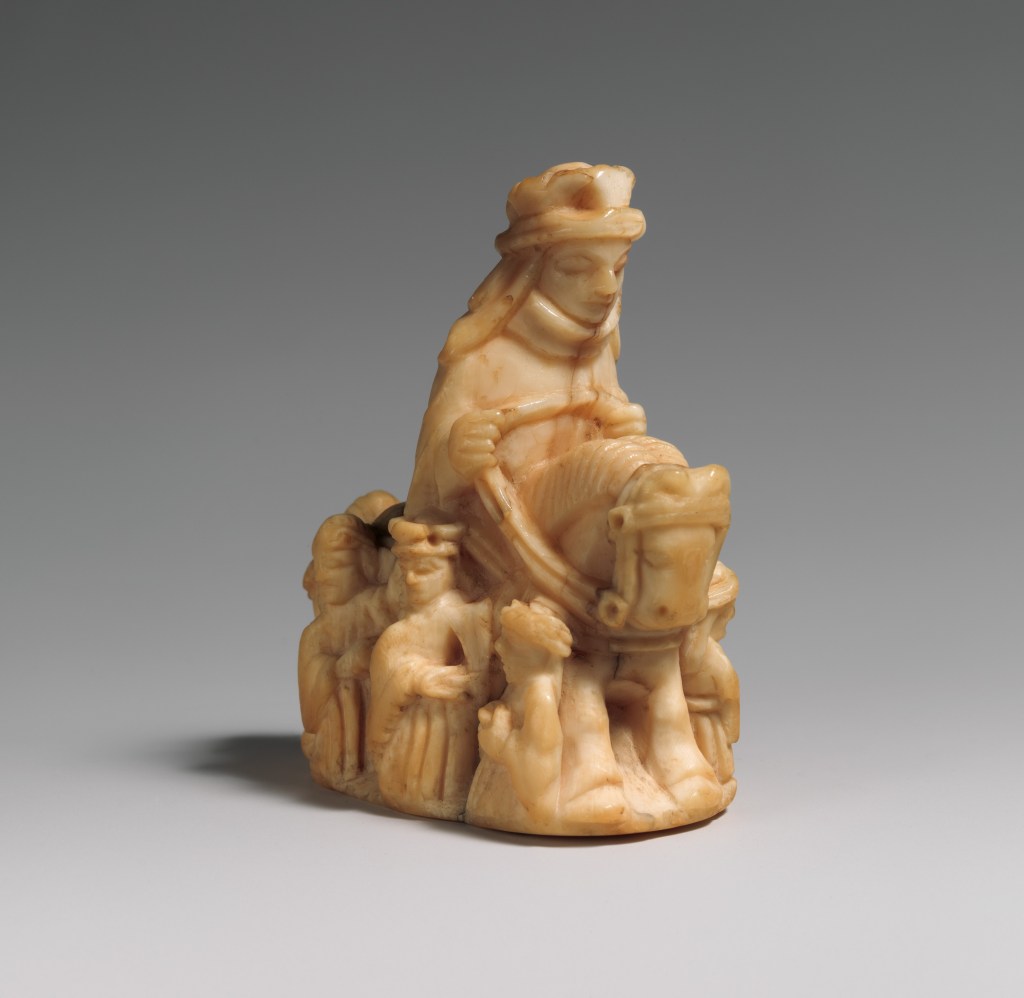
Around the same time that William the Conqueror conquered England primogeniture was gaining traction in Europe. It is difficult to find resources chronicling whether the practice was explicitly introduced by William among his newly installed lords but it is said that the main intentions were to prevent fragmentation of fiefs and keep a few powerful and loyal lords, rather than land ownership fracturing and the Monarch’s control becoming diluted. It is indeed difficult to unpick how the change to primogeniture took place. Henry Maine 1822-1888; comparative jurist and historian, on the topic of the origins of primogeniture:
“There are always certain ideas existing antecedently on which the sense of convenience works, and of which it can do no more than form some new combination; and to find these ideas in the present case is exactly the problem.”
Sir Matthew Hale 1609-1676, in his History of the Common Laws of England, sets out the law as he can figure it existed around the reigns of Henry I. r. 1100-1135 . and Henry II. r. 1154-1189. His exposition is based mainly off an author Glanville d. 1190, who was Chief Justicar of England during the reign of Henry II.:
‘By this law it seems to appear;
1. The eldest Son, tho’ he had Jus primogeniture, the principal Fee of his Father’s Land yet he had not all the Land.
2. That for want of Children, the Father or Mother inherited before the Brother or Sister.
3. That for want of Children, and Father, Mother, Brother and Sister, the Land defended to the Uncles and Aunts to the fifth Generation.
4. That in Successions Collateral, Proximity of Blood was preferred.
5. That the Male was preferred before the Female, i.e. The Father’s Line was preferred before the Mother’s, unless the Land descended from the Mother, and then the Mother’s Line was preferred.’
Bastards could not inherit. Provisions are also made in case of leprosy, assessed appropriately by the church, property to be transferred from brother to sister. He goes on to express his entertainment:
‘Secondly, There was another Curiosity in Law, and it was wonderful to see how much and how long it prevailed; for we find it in Use in Glanville, who wrote … Nemo potest esse Tenens & Dominus, & Homagium repellit Perquifitum: And therefore if there had been three Brothers, and the eldest Brother had enfeoffed the second, reserving Homage, and had received Homage, and then the second had died without Issue, the Land should have descended to the youngest Brother and not to the eldest Brother… as ’tis here said, for he could not pay Homage to himself’
That is, if there were three brothers, and the second paid homage to the first in a subinfeudation, then in the event the second son expired, his rights would pass to the third son and not back to the first, the reasoning being that the first son could not pay homage to himself, that is, he could not be the owner of title that required him to be his own vassal. The latin reads ‘No-one can at the same time be tenant and lord.’
Around half of what is written in Hale’s account mirrors the probate arrangements we have today. The protection for widows, who receive one third of the goods of the deceased (aka one third of the moveable estate) are just one example of how the 11th Century doctrine shares remarkable similarity to the modern day system.
References:
1. Mumby J. Anglo-Saxon inheritance. https://earlyenglishlaws.ac.uk/reference/essays/anglo-saxon-inheritance/#:~:text=Customary%20rules%20are%20thought%20to,group%20of%20closely%2Drelated%20persons. Updated n.d.
Land Ownership – Part II – Ownership Design
Primogeniture is said to have started in Normandy, it then spread to England with the invasion of William the Conqueror.
Feudalism grew organically out of manorialism, manorialism being a solution to the problem of providing food and security for subsistence farmers. The introduction of primogeniture in England may have been more deliberate however: we say that is was an ‘ownership design.’ Primogeniture had certain advantages for those who ruled using the feudal system. It prevented the fragmentation of land holdings, therefore keeping a small number of lords who could be monitored and whose allegiance could be encouraged. There was also the opportunity to claim a kind of tax: feudal relief. When William had conquered England he started from the assumption that all the land was his, and he was free to grant fiefs to whoever he wished. When one of his barons died, their eldest son had to pay money to the crown as feudal relief to allow them to take on their father’s fief. In effect, by default lands reverted to William on the deaths of his barons. By the time William was finished with his changes, the subdivision of his new baronial system in terms of fiefs granted was actually very similar to the subdivision between the Earls that had previously existed in the Anglo-Saxon system. A key difference was that the noblemen William installed were mostly Normans, not Anglo-Saxons. William the Conqueror’s management of England is a significant example of design of an ownership form using ownership design control to the ruler’s advantage.

In their book ‘Mine’ two lawyers Heller and Salzman introduce ideas of ownership design and give a variety of examples, many of the best come from American History. They explore how ownership in general is governed by a short list of possible narratives2.
One of the first narratives is attachment. By this we mean that an object is owned because it is attached to another object. A typical example is that the air above and depths below land could be owned by the owner of the land, although in practice this is rarely true. Indeed one of the reasons Iraq claimed for their invasion of Kuwait in 1990 and the start of the First Gulf War was that Kuwait was accused of ‘slant-drilling’ under Iraq’s Rumaila Oil Field, that is the Kuwaiti’s are said to have been drilling diagonally or even horizontally under the Iraqi border, stealing oil that belonged to Iraq by attachment.
A second narrative is first come first served; that is, whoever got there first owns it. A good example of this is the Oklahoma Land Rush of 1889 , where at noon on 22. April 1889 settlers were allowed to cross into the ‘Unassigned Lands’ in a race to stake their claim to 160 acres under the Homestead Act of 1862.
But they were not there first, the Indians had been there first, who were often forced to relocate. The key here is the idea of labour. Under the Homestead Act, he who wished to be given title of the land he claimed had to build a homestead and improve the plot through their labour for at least five years. America’s ownership form for the agricultural steading was thus designed based partly on the idea of productive labour, which the Indians’ activities did not satisfy. Ownership favouring the immigrant over the Indian was also backed up on basis of might is right, another narrative used consistently throughout history to provide a basis for ownership.
The way in which the Indians were displaced need not be looked on as universally glib however. European settlers were subsistence farmers and the idea of a homestead surrounded by heartily worked agricultural land will have had a sanctity that an apartment dwelling millennial cannot imagine. As with the reign of monarchs during feudal time, the ownership design was ordained by God, after all; Genesis 9:7 :‘Be fruitful and multiply.’’
The idea that land can be claimed by labour upon it emerged under the premise that agricultural land that sat idle should be put to use to feed the populus. Under the principle of adverse possession, where A owns land and B uses it for a time without A’s re-occupation, then B shall become the owner of the said land. This law transformed over the centuries into its modern form, where the labour aspect is less noticeable, and factors like actual possession with exclusion and intention to possess as well as land registration status contribute to the outcome of cases. At the present time in English Law, the time limitation for which the claimant must occupy is ten years. Increasingly the conditions for adverse possession become more stringent, with land registration helping to block all but the most exceptional of claims.
A key narrative which is an alternative to the attachment (or ‘under’ and ‘above’ argument) is that of capture. This doctrine most likely originates from the hunting of animals and gathering of foodstuffs, and is a kind of blend of first come first served and ownership through labour arguments. The historical application no doubt applied to animals hunted and captured on lands that lacked a clear owner, like those in the New World. We see its application more recently in oil, gas and groundwater.
Mitchell, J in Westmoreland & Cambria Nat. Gas Co. v. De Witt [1889] 18 A. 724,130 Pa.St. 235:
‘Water and oil, and still more strongly gas, may be classed by themselves, if the analogy be not too fanciful, as minerals ferae naturae [wild animals]. In common with animals, and unlike other minerals, they have the power and the tendency to escape, without the volition of the owner. Their “fugitive and wandering existence within the limits of a particular tract is uncertain”.… They belong to the owner of the land, and are part of it, so long as they are on or in it, and are subject to his control; but when they escape, and go into other land, or come under another’s control, the title of the former owner is gone. Possession of the land, therefore, is not necessarily possession of the gas. If an adjoining, or even a distant, owner, drills his own land, and taps your gas, so that it comes into his well and under his control, it is no longer yours, but his.’
So because the substance is fugacious1, in that its flow cannot be controlled and its distribution cannot (or could not) be determined, it belongs like a wild animal, to whoever can capture it through extraction2. It is important to note that the capture has to occur on the land of he who extracts, so slant drilling, as discussed above in the case of the Rumaila Oil Field, is off the menu.
A related concept to the policy of capture is that found in the case Rylands v Fletcher (1868) LR 3 HL 330. Blackburn J:
“the person who for his own purposes brings on his lands and collects and keeps there anything likely to do mischief if it escapes, must keep it in at his peril, and, if he does not do so, is prima facie answerable for all the damage which is the natural consequence of its escape”
In this case a newly constructed reservoir above a series of coal shafts flooded a neighbouring mine upon first being filled, causing significant damage. So if A has something on his land that is bound to cause mischief, and allows it to escape onto B’s land, causing damage, then A is liable for that damage.

The result of the law of capture in the Pennsylvania oil rush was a sea of ‘nodding donkeys’.2 The problem was that when there are too many wells the oil pressure drops, and the approach of sinking as many wells as possible becomes counterproductive. There are similar problems in the present day in California’s Central Valley with water, where a ‘race to the bottom’ with ever deeper wells finding a law of diminishing returns and causing only further depletion of the water table. In some places in the Central Valley it is said that the land has sunk by as much as 28 feet due to the loss of water below. This sinking problem due to depletion of the water table is the same problem as was identified in Venice, Italy. Water is surely one of the great problems that will have to be tackled more inventively with coming climatic changes and increasing population pressure in so many parts of the world. Perhaps some form of ownership design will help to prevent excessive depletion in the years to come.
But a solution was found in the case of the Pennsylvania oil wells. A new ownership design called unitization was introduced. The idea of unitization is that extraction operations straddle more than one land holding.3 The various owners of the land are then compensated under a system that assesses the contribution of their land holding to the output.
Some comparisons can be drawn with new ownership designs for fishing rights. If overfishing occurs due to a pure capture policy, then fishing communities are drawn into a law of diminishing returns. The knee jerk reaction of authorities to depletion in places like Alaska due to overfishing was to introduce straightforward catch limits where the season for any given species ended when a specified quantity had been caught. This resulted in a dangerous race for fishermen to catch as large a share of the catch limit before the season was abruptly brought to a close. It’s this race that inspired the well known TV show Deadliest Catch where Alaskan king crab fishermen race through all hours to place their crab pots, in tense competition with other fishermen trying to do the same. These kind of catch limits did help fish stocks but created an undesirable race, making the life of the fisherman only more dangerous and exhausting than it already had been.

Iceland came up with an ownership design for fishing that replaced capture without the problems of catch limits: the Individual Fishing Quota, or IFQ, otherwise known as a catch share. Fishermen were assigned quotas for different species of fish before the season even started. The quotas were initially based upon how much fish different boats had caught in previous years. There are many models for a marketplace for IFQs, sometimes they can be bought, sold, or leased, in other systems they cannot and return to the government if they are unused for re-auction. The obvious major advantage is the increased stocks providing security to the fishermen that they will catch their quota. The arrangement means that if the weather is dangerous the fishermen know that they can wait for a better day to catch their share. There are also business advantages: because the catch is so much more predictable, it is considerably easier to obtain finance with the future catch as collateral. The system was very successful in Alaska, with a significant increase in profits, and has been used in Australia, New Zealand, and other US states: A good case study of unlocking value through ownership design.
Cases:
Mitchell, J in Westmoreland & Cambria Nat. Gas Co. v. De Witt [1889] 18 A. 724,130 Pa.St. 235
Rylands v Fletcher (1868) LR 3 HL 330
Other References:
1. Low C. The rule of capture: Its current status and some issues to consider. file:///C:/Users/Len/Downloads/alr,+226-227-1-PB.pdf. Updated 2009.
2. Heller M, Salzman J. Mine: How the hidden rules of ownership control our lives . Doubleday. New York.; 2021.
3. Thomson Reuters Practical Law. Glossary: Unitisation (oil & gas) (UK). https://uk.practicallaw.thomsonreuters.com/w-018-5594?originationContext=knowHow&transitionType=KnowHowItem&contextData=(sc.Default)&firstPage=true. Updated 2022.
Part III – Exclusion, Psychology and Perpetual Trusts
In his book Alchemy: The Surprising Power of Ideas that Don’t Make Sense, Rory Sutherland puts forward the suggestion that what is going to revolutionise mankind this century is not data but psychology. He gives numerous examples of where approaches are logical, but the problems are psychological. Why do we have stripey toothpaste? Because it increases the complexity of the product, we therefore assign it a higher value. Why do we even brush our teeth? Partly because we don’t want to get cavities, but possibly moreso because we are terrified of halitosis.

The barriers that the ownership designs of unitization and catch shares that we have seen in Part II have to overcome are largely psychological. Unitization clearly leads to better economies of scale in oil extraction and therefore there is an obvious motivation for the economically minded landowner to ‘team up,’ not necessarily for the common good but to increase yield on capital. The psychological barrier to the individual fishing quotas established in Iceland is more difficult. The capture narrative must be overcome, there is certainly something (perhaps masochistically) attractive about setting out to trawl the ocean for the catch, whatever the elements, and unfettered by any QUANGO standing in the way. A yet more prevailing narrative to overcome is that of pure labour. There is an instinct that says he who works harder and longer should receive a greater reward, that is, greater ownership; the introduction of quotas removes competition. So new ownership designs have to overcome already existing ownership narratives for successful adoption.

A psychological concept that can be difficult to overcome is the endowment effect. This is the principle that once something becomes ours, it becomes worth more to us than it was directly before we owned it. There are several factors at play here, one of which is loss aversion, by which we mean the reason why a Wall Street trader won’t close out on his poor position, because when he does, his loss will crystallise. Another narrative to consider is that of ‘a bird in the hand is worth two in the bush,’ a new object we are offered as a replacement to the one we own may have some defect or disadvantage which is not revealed on initial inspection. Neither loss aversion or the risks of owning something new really get to the crux of what we are talking about. I put it that we form relationships with objects. Consider a friend has a twin, and you suddenly cease to see this friend, because you conclude the other twin is just as good as they are, and you spend time with the second twin instead. This circumstance causes immediate distaste. I put it that when an object becomes ours we form a loyalty to it, in the same way that we give acquaintances we have known for longer preference over those who we have most recently met. I see no reason why this approach shouldn’t be applied to land just as much as to one’s chattels.
A good place to start when thinking about the psychology of human behaviour around land ownership is with the great thinkers of the Scottish Enlightenment; David Hume, Adam Smith. Henry Home (Lord Kames) illustrates the lack of good sense in the human condition with respect to property. From his Historical Law Tracts:
‘I shall conclude this tract with a brief reflection upon the whole. While the world was rude and illiterate, the relation of property was faint and obscure. This relation was gradually unfolded, and in its growth toward maturity accompanied the growing sagacity of mankind, till it became vigorous and authoritative, as we find it at present. Men are fond of power, especially over what they call their own; and all men conspired to make the powers of property as extensive as possible. Many centuries have passed since property was carried to its utmost length. No moderate man can desire more than to have the free disposal of his goods during his life, and to name the persons who shall enjoy them after his death. Old Rome, as well as Greece, acknowledged these powers to be inherent in property; and these powers are sufficient for all the purposes to which goods of fortune can be subservient. They fully answer the purposes of commerce; and they fully answer the purposes of benevolence.’
This certainly serves as a useful word on property. He goes on:
‘But the passions of men are not to be confined within the bounds of reason: We thirst after opulence; and are not satisfied with the full enjoyment of the goods of fortune, unless it be also in our power to give them a perpetual existence, and to preserve them for ever to ourselves and our families. This purpose, we are conscious cannot be fully accomplished; but we approach to it the nearest we can, by the aid of imagination. The man who has amassed great wealth, cannot think of quitting his hold; and yet, alas! he must die and leave the enjoyment to others. To colour a dismal prospect, he makes a deed, arresting fleeting property, securing his estate to himself, and to those who represent him in an endless succession: his estate and his heirs must forever bear his name; every thing to perpetuate his memory and his wealth. How unfit for the frail condition of mortals are such swoln conceptions? The feudal system unluckily suggested a hint for gratifying this irrational appetite. Entails in England, authorified by statute, spread every where with great rapidity, till becoming a public nuisance, they were checked and defeated by the authority of judges without a statute. It was a wonderful blindness in our legislature, to encourage entails by a statute, at a time when the public interest required a statute against those which had already been imposed upon us.’
Entails refer to a kind of deed that specifies conditions for inheritance. They were used typically to keep land together with the male line and a title, removing the discretion of the descendants to leave their property to whom they wished. It is difficult to find information on these instruments but they do have a similarity to modern day trusts, and no good analysis of land ownership lacks a comment on trust law.
The idea is genius. A deed of trust is a document that sets out that A, the settlor, gives property to B, the trustee, with the condition that B looks after the property to the benefit of C, the beneficiary. So A gets what he wants from the assets held by B, without having to own them. He (or she) can effectively pause the tape on their needs and wants, and prevent any future claims from divorcing spouses. Classic junctures for a trust to commence include before marriage, and on death. In some jurisdictions C could be A; you can create a trust with yourself as the beneficiary.

A key bone of contention has been dynasty trusts , that is trusts which continue into the future indefinitely. These provide a key advantage for the settlor in that they can support future generations with income while protecting against unscrupulous spending of the capital; the threat to a fortune of bad company or gambling might be a consideration.
The law against perpetuity of trusts; that is trusts which vest forever in to the future, has its roots in the case of the 6th Duke of Norfolk, and in a complex set of arrangements: Henry, 15th Earl of Arundel, wanted to arrange the inheritance of his assets in a particular manner:
- Initially the majority of the assets were left to his eldest son, Thomas, who was mentally incapacitated and incapable of marriage. Thomas lived in an asylum in Padua, in the then Republic of Venice.
- A second, lesser portion of assets would be left to the second son, also Henry.
- On Thomas’ death the assets of Thomas would pass to Henry, but the smaller second portion of assets Henry had initially inherited would pass to the fourth son, Charles.
This is termed a shifting executory interest.
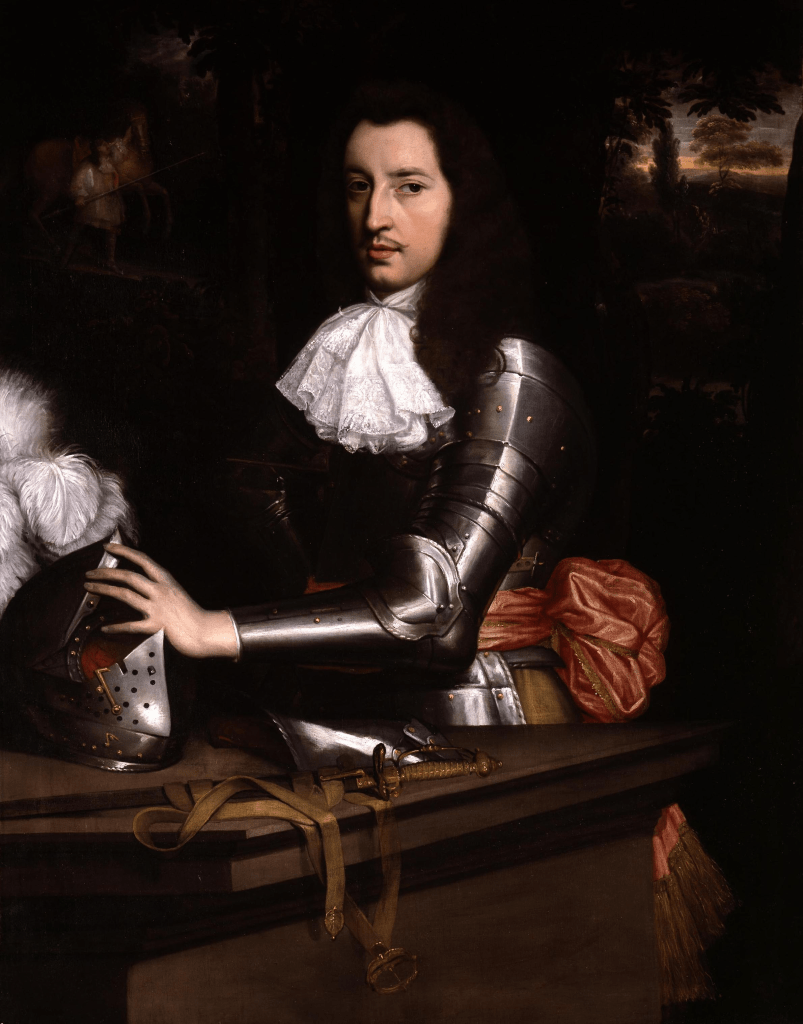
The problem was that once Thomas in Padua, by this time the 5th Duke of Norfolk, had died, his brother Henry, 6th Duke of Norfolk didn’t want to hand over the relevant assets to the fourth son Charles, his case being that an unreasonable period of time had elapsed since the shifting interest was created. And so it went to the highest court in the land, and the House of Lords held that such an entailment, or in modern terms; trust, could not remain valid for such an extended period of time. The thinking at the time was that allowing interests that vest too far into the future tied up assets for future generations in an unhealthy way that damaged the flow of money in an economic sense. Attempts to control property beyond the grave were unattractively termed ‘the dead hand’.1
Inset picture of Henry, 6th Duke of Norfolk:
The Rule Against perpetuities was only later refined in the case Cadell v. Palmer (1833), 7 Bli. N.S. 202:
“Every attempted disposition of land or goods is void, unless, at the time when the instrument creating it takes effect, one can say, that it must take effect [if it take effect at all] within a life or lives then in being and 21 years after the termination of such life or lives, with the possible addition of the period of gestation.”
A better formulation was put by the American legal Scholar John Chipman Gray:
“No interest is good unless it must vest, if at all, not later than twenty-one years after some life in being at the creation of the interest.”
This area of law is legendary for its complexity, but the basic idea is that the rule allows enough time for unborn grandchildren to attain the age of majority before assets in trust are vested in them: A creates a trust with the intention of leaving assets to his daughter B’s children should she have any. If B gives birth and dies that same day, then the 21 years provides the time for the child C to reach age of majority and have the assets vested in them.
The rule has undergone a long series of alterations since its original inception, mainly through the Perpetuities and Accumulations Act 1964 and more recently the Perpetuities and Accumulations Act 2009, which set the perpetuity period at a flat 125 years.2
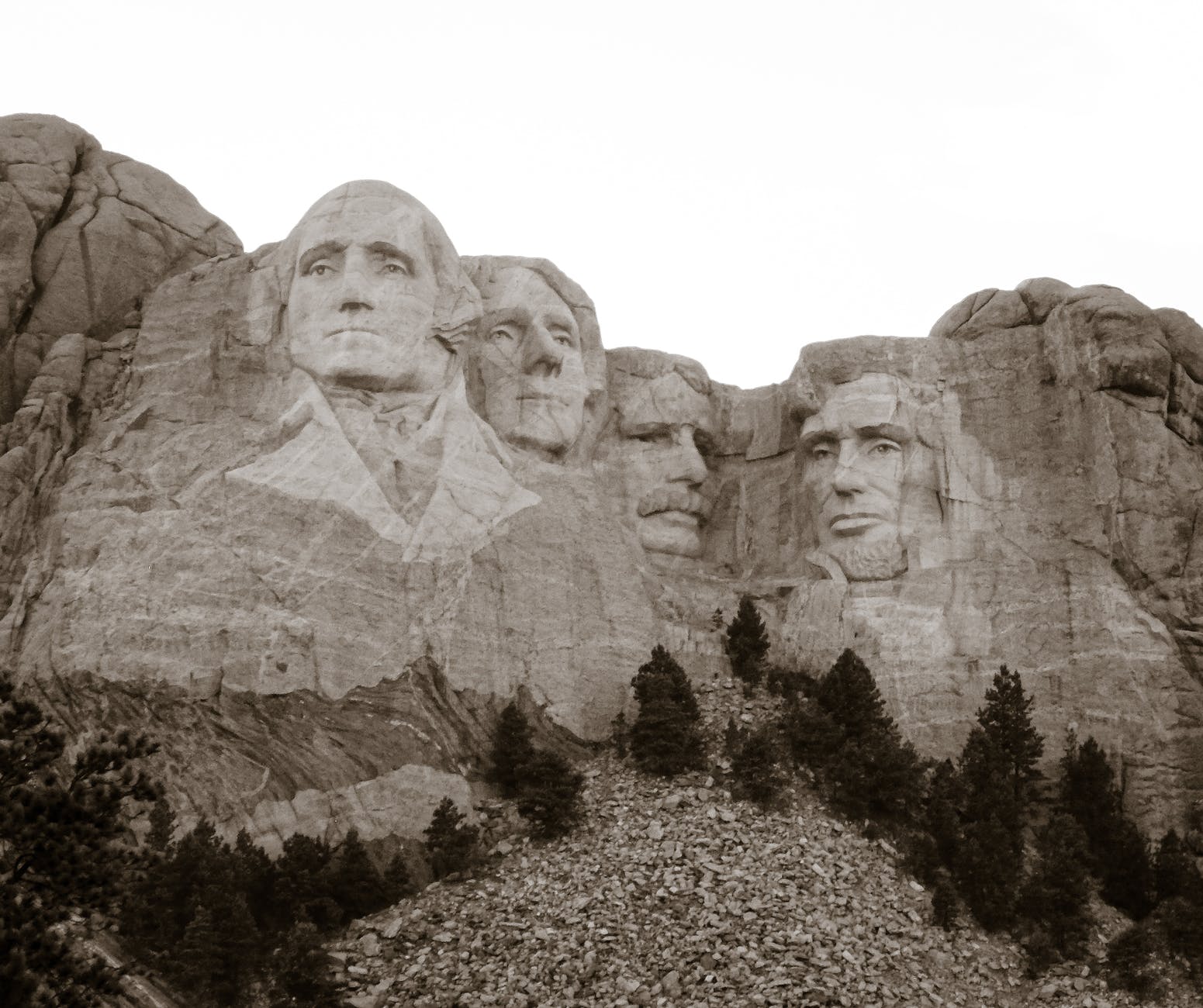
In America many states now no longer follow the Rule Against Perpetuities and allow perpetual trusts or dynasty trusts. The pattern started with then Governor of South Dakota William ‘Wild Bill’ Janklow.
Inset picture of ‘Wild Bill’:

Janklow had initial success removing restrictions on credit card interest rates, thus persuading credit card companies to relocate their operations to South Dakota. His next operation was to write a law allowing the creation of perpetual trusts.3 Initially South Dakota emerged as a global tax haven. Other states soon followed in a race to the bottom and in recent time the count of States that allowed dynasty trusts stood at 21 in total.4 South Dakotan trust companies now hold hundreds of billions of dollars in assets.5 Questions were however soon asked about which parties benefited other than the financial and legal professionals who encouraged the creation of these trusts.
But on the other hand perhaps the 21 states legalising dynasty trusts have it right; that the ‘dead hand’ of trusts which reached too far in to the future was not enough of an affront to future commerce and dignity to merit their prohibition. Perhaps the ‘dead hand’ need not be so dead after all. Times may have changed.
However, returning to Lord Kames’ analysis:
‘[We] are not satisfied with the full enjoyment of the goods of fortune, unless it be also in our power to give them a perpetual existence, and to preserve them for ever to ourselves and our families.’
Is it not this thirst for the absolute that we feel so strongly. Absolute guarantee of our dynasty, and absolute power over what happens on the land we own. Land ownership comes with rights, but it increasingly comes with restrictions and responsibilities.
One right that comes with residential property, and traditionally with agricultural land, is the right of exclusion. There are some who choose to build the whole construct of ownership based on concepts of exclusion and use.6 It was one of the first instincts of European settlers under the Homestead Act of 1862 to exclude cowboys and their migrating herds of cattle from their land. This desire for exclusion was expressed as a desire for enclosure, and with the invention of barbed wire by John Warne Gates this became possible. Gates described his invention of barbed wire as “lighter than air, stronger than whiskey, cheaper than dust” and it transformed America within a matter of years from a land of herding cowboys to a nation of homesteads and agricultural partitions.
In America exclusion is advertised at its most extreme by the castle doctrine, which is followed by the majority of US states. Under the castle doctrine the threat of an intruder to life or limb on home property may be met with defence up to and including deadly force. The usual duty to retreat when threatened rather than ‘standing your ground’ is dispensed with – the concept is similar to that of justifiable homicide but the bar for what motivates a ‘defensive attack’ significantly lower.

A tragic example of the consequences is that of Yoshihiro Hattori, a Japanese exchange student visiting Baton Rouge, Louisiana in 1992. He and another student, Webb Haymaker set out to join a Halloween party but got the wrong house. The resident Rodney Paiers had an encounter with the two students in which he was armed with a handgun. He told the pair to ‘freeze’, but in the confusion and with limited knowledge of Englsih Hattori continued to approach Paiers, perhaps believing the situation to be a Halloween prank.It is possible Hattori’s camera was mistaken for a weapon. Paires shot Hattori, who died soon afterwards. Initially the Baton Rouge Police Department refused to charge Paires for any crime on the basis he was ‘within his rights in shooting the trespasser.’ The incident did eventually make its way to trial where Rodney Paires was acquitted of manslaughter, to the applause of the courtroom.

There are numerous cases of gun deaths in this residential setting and they typically follow the same pattern: confrontation, misunderstanding or overreaction, firearm easily accessible, fatal shooting. They illustrate the level of protectiveness people have over their home.
This alertness to intrusion is also illustrated by the proportion of people who feel compelled to move to a different property following a break in or ‘home invasion.’ According to home insurer Policy Expert, 12% of burglary victims moved homes as a result of the intrusion. It’s as if the property becomes ‘soiled’ in the mind of the victim and they can’t square with remaining there.
The land which is our home clearly forms a deep part of our emotional makeup. The highly influential Swiss psychoanalyst Carl Gustav Jung believed that when a house appeared in a dream, the house was a metaphor for the psyche. He himself had a dream he associated with this finding:
“I was in a house I did not know, which had two storeys. It was “my house”. I found myself in the upper storey, where there was a kind of salon furnished with fine old pieces in Rococo style. On the walls hung a number of precious old paintings. I wondered that this should be my house and thought “not bad”. But then it occurred to me that I did not know what the lower floor looked like. Descending the stairs, I reached the ground floor. There everything was much older. I realised that this part of the house must date from about the fifteenth or sixteenth century. The furnishings were mediaeval, the floors were of red brick. Everywhere it was rather dark. I went from one room to another thinking “now I really must explore the whole house.” I came upon a heavy door and opened it. Beyond it, I discovered a stone stairway that led down into a cellar. Descending again, I found myself in a beautifully vaulted room which looked exceedingly ancient. Examining the walls, I discovered layers of brick among the ordinary stone blocks, and chips of brick in the mortar. As soon as I saw this, I knew that the walls dated from Roman times. My interest by now was intense. I looked more closely at the floor. It was of stone slabs and in one of these I discovered a ring. When I pulled it, the stone slab lifted and again I saw a stairway of narrow stone steps leading down to the depths. These, too, I descended and entered a low cave cut into rock. Thick dust lay on the floor and in the dust were scattered bones and broken pottery, like remains of a primitive culture. I discovered two human skulls, obviously very old, and half disintegrated. Then I awoke.”
Jung interpreted the house in the dream as representing his psyche, with the upper levels representing his normal consciousness, ranging down to the lower primitive levels which represent his instincts and collective unconscious; that is; the collection of knowledge and imagery shared by all through ancestral experience.

So a home forms a key part of our psyche and may be an expression of our self on the deepest level. How far this extends to wider (perhaps agricultural) lands remains unclear, but some things are for sure: humans have a strong desire to preserve and perpetuate their wealth, sometimes desiring that it benefit their descendants indefinitely. Added to this we have a strong instinct to exclude others from the spaces we have actual ownership of, and can easily find ourselves using lethal force to ‘stand our ground’ as we interpret a stranger is ‘in the wrong place;’ according to our deepest instincts about our territory.
All this together makes for a somewhat tyrannical evaluation of the human condition with relation to land ownership.
Statute:
Perpetuities and Accumulations Act 1964
Perpetuities and Accumulations Act 2009
Case Law:
The Duke of Norfolk’s Case
Cadell v. Palmer (1833), 7 Bli. N.S. 202:
References:
1. Law Articles. Rule against perpetuity and its exceptions: A sine qua non of property transfer. https://www.legalservicesindia.com/law/article/1030/8/Rule-against-perpetuity-and-its-exceptions-A-sine-qua-non-of-Property-transfer. Updated 2018.
2. Law Commission. Perpetuities and accumulations: Current project status. https://www.lawcom.gov.uk/project/perpetuities-and-accumulations/. Updated n.d.
3. Heller M, Salzman J. Mine: How the hidden rules of ownership control our
 Landed
Leave a comment